TL;DR: A UGC creator makes short videos and photos for brands to use in their own ads and product pages, in the style of an ordinary customer. You do not need followers, because the brand posts the content, not you. You can start with the phone you already have, and once you have a small portfolio you can land a first paid brief within weeks. Rates vary widely: one 2026 rate guide puts a typical video at roughly 150 to 210 dollars, while marketplaces that set the price for you often pay far less. Charge separately for usage rights, and get every deal in writing.
Scroll through any social feed and you will see ads that do not look like ads: someone holding a product up to the camera, unboxing it in their kitchen, explaining why it fixed a problem. Much of that is user-generated content, or UGC, made to order by freelance creators. Brands buy it because it feels like a recommendation from a real person and fits in with the posts around it, where a polished studio ad stands out as an ad.
For you, the appeal is that you are selling a skill, not an audience. This guide explains what UGC creators actually make, what they earn, how to build a portfolio before your first client, how to price usage rights, and the rules you need to follow.
What a UGC Creator Actually Does
A UGC creator is a freelancer who produces content for a brand to publish on the brand's own channels. The typical deliverables are:
- Short videos for ads. Fifteen to sixty seconds for TikTok, Instagram Reels or YouTube Shorts: a hook in the first two seconds, the problem, the product, and a reason to buy.
- Testimonial and review videos. You talk to the camera about using the product, the way a happy customer would.
- Unboxing and how-to clips. Showing what arrives, how to set it up, or how to use it.
- Product photos. Natural, lived-in pictures for product pages, emails and social posts.
- Raw footage and hook variations. Extra takes the brand can edit into new ads, or three different openings so it can test which one works best.
The key difference from influencer marketing: an influencer is paid for access to their followers, while a UGC creator is paid for the content itself. That is why a creator with 200 followers can earn as much per video as one with 20,000.
What UGC Creators Earn
There is no official rate card, and published figures should be read as estimates. A 2026 rate guide from Influee, a UGC platform, puts the average single video at roughly 150 to 212 dollars, with a median around 175, and notes that individual creators range from free work to over 1,000 dollars. On marketplaces that set the price for you, creators in reviews report fees under 100 dollars per video, often with the product included.
Three things move your rate the most:
- Usage rights. Content a brand posts on its own page is worth less than content it runs as paid ads for months. Licensing is usually priced on top of the base fee.
- Extras. Raw footage, extra hooks and different aspect ratios are separate deliverables, so price them as such.
- Your niche and track record. Creators who know skincare, fitness, software or parenting products, and can show results, charge more than generalists.
To see what this could add up to, picture four videos a month at 150 dollars: 600 dollars before tax, for perhaps 15 to 20 hours of filming, editing and admin. Try your own numbers in our side income calculator.
What You Need to Start
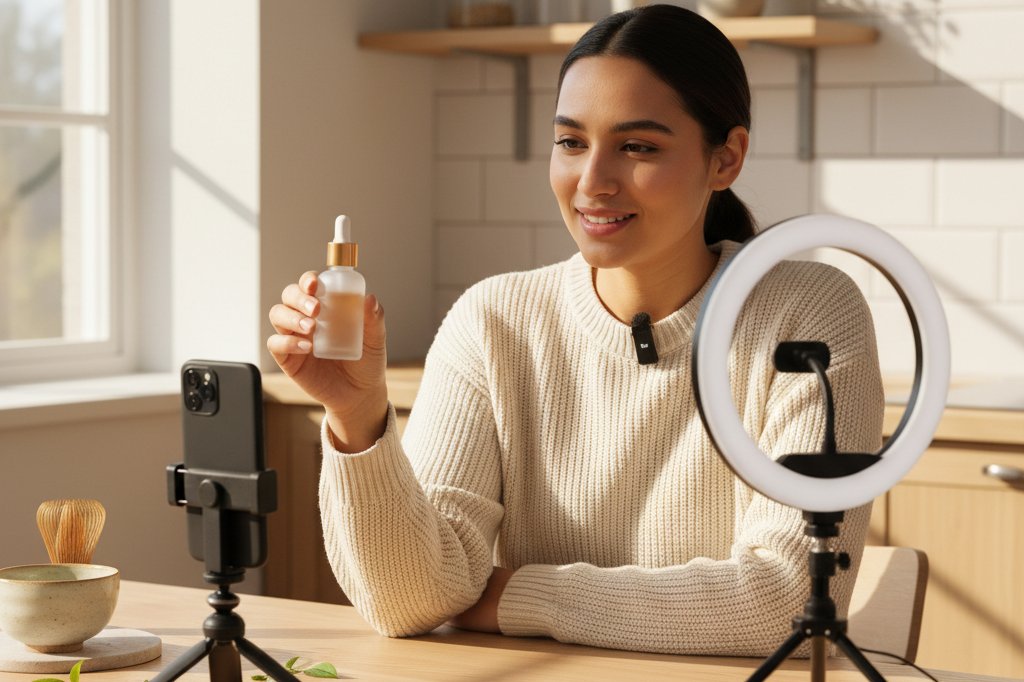
Less than most people think. A recent smartphone films good enough video for social ads. Add three cheap upgrades when you can: a clip-on microphone, because clear sound matters more than a sharp picture; a ring light or a window for soft daylight; and a free editing app such as CapCut for cuts, captions and text on screen. A tidy corner of your home that looks natural on camera is your studio.
The skills matter more than the kit. Learn to write a hook that stops the scroll, keep each clip short, speak naturally rather than reading, and always show the product in use rather than just holding it.
Build a Portfolio Before Your First Client
Brands hire from portfolios, so make one before you pitch. Choose three to five products you already own and like, and make the kind of video a brand would pay for: a 30-second testimonial, an unboxing, a problem-and-solution clip. Do not imply that a brand has hired you; present them as spec work.
Host the videos somewhere a brand can watch them in one click, such as a simple portfolio page or a shared folder, and add a short line on who you are, your niche, and what you offer. If you have shot UGC-style content for your own channel, include it; our guide on making money on YouTube covers the filming basics that carry over directly.
Finding Your First Brands
- UGC marketplaces. Platforms that connect brands with creators post open briefs you can apply to. They pay less but give you real briefs, deadlines and reviews to learn from.
- Direct outreach. Small online brands, especially new webshops, often need content and have no agency. A short, personal email with one relevant sample works better than a long pitch.
- Freelance platforms. UGC gigs also appear on general freelance marketplaces; the profile and pitching advice in our guide to starting freelancing applies here too.
- Repeat clients. A brand that likes your first video usually needs more next month. Ask for feedback, deliver on time, and offer a small monthly package.
Pricing Usage Rights and Getting It in Writing
Before you start filming, agree in writing on what the brand gets and for how long. A simple agreement covers the deliverables, the number of revisions, the deadline, the fee, and the usage: organic posting only, or paid ads, on which platforms, for how many months. Charge more for longer paid usage, and price an extension for when the period ends.
Keep a copy of the signed agreement and of the final files you delivered. If a dispute ever comes up about what was agreed or which version you sent, a timestamped record helps; a sealing service such as XSeal can seal the signed agreement so you can later prove it has not been changed.
The Rules: Disclosure and Honesty
If you post sponsored content on your own accounts, you must disclose the relationship. The US Federal Trade Commission's guidance for influencers says to disclose any financial, employment, personal or family relationship with a brand, including free products, and to make the disclosure hard to miss: in the video itself for video content, not only in the description, and not buried among hashtags or behind a "more" link. Plain words such as "ad" or "sponsored" work; vague ones such as "collab" or "spon" on their own do not. Do not rely on a platform's built-in label alone. Rules differ by country, so check your local advertising regulator too.
Honesty also protects your career. Only make claims about a product that you can stand behind, never invent results, and turn down products you would not recommend to a friend.
Is UGC Creation Right for You?
It suits you if you are comfortable on camera, enjoy short-form video, and like the idea of selling a creative skill without building an audience first. It is less suited to you if you want guaranteed monthly income from day one, because work comes in briefs and the first months are about building a portfolio and a reputation. Like most freelance work, income stops when you stop, so treat it as a side income until repeat clients make it steady. For other ways to earn and how quickly they pay, see compare ways to earn.
Frequently Asked Questions
Do you need followers to be a UGC creator?
No. Brands pay UGC creators for the content and post it on their own accounts, so your follower count does not matter. Your portfolio does.
How much do UGC creators charge per video?
Estimates vary widely. One 2026 rate guide puts a typical video at about 150 to 212 dollars, while marketplaces that set the price often pay under 100 dollars. Usage rights for paid ads and extras such as raw footage are usually charged on top.
What equipment do I need for UGC?
A recent smartphone, a clip-on microphone and good light are enough to start. A free editing app handles cuts and captions.
Do UGC creators have to disclose sponsored content?
Yes, whenever you post sponsored content on your own accounts. US guidance says the disclosure must be clear and in the video itself, using plain words such as "ad" or "sponsored".
How do I get my first UGC client?
Make three to five sample videos with products you own, put them on a simple portfolio page, then apply to briefs on UGC marketplaces and send short, personal pitches to small online brands.